Desserts
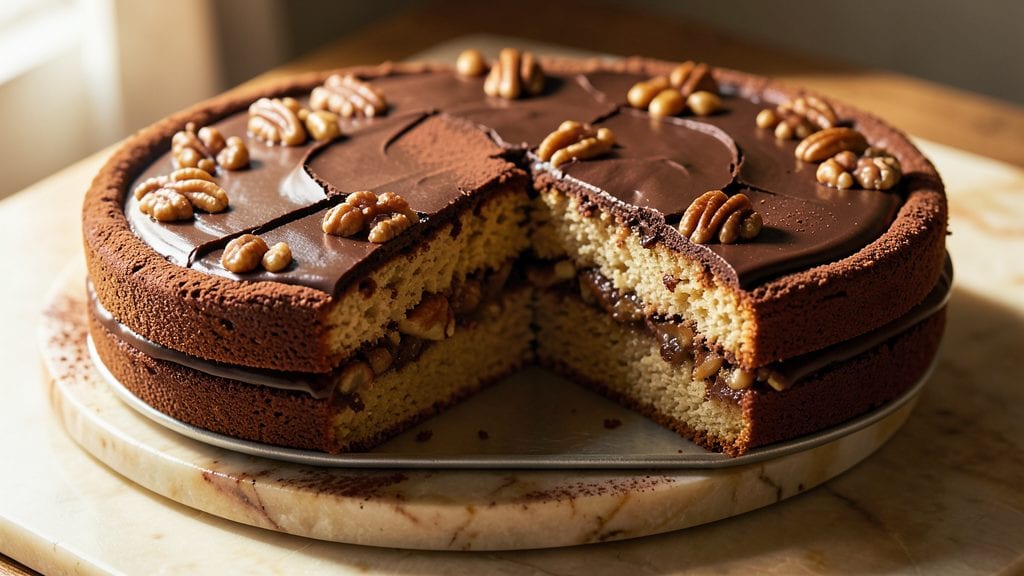
Baker's Original German chocolate cake delivers that iconic combination of rich chocolate layers, crunchy pecans, and velvety coconut frosting—just like the brand you love, made perfectly at home. The secret lies in precise baking times and a toasted coconut frosting that creates that signature texture.
I’ve tested countless variations to ensure every bite delivers the same nostalgic flavor profile.
This recipe maintains the traditional German chocolate cake experience with its signature pecan-studded layers and rich chocolate cake base. The frosting, made with toasted coconut, adds that signature crunch and sweetness that sets it apart.
With three simple layers and a foolproof frosting method, you’ll achieve restaurant-quality results every time.
What makes this recipe special is the balance of textures—tender cake, crunchy pecans, and creamy frosting—all coming together in one decadent dessert. The cake layers stay moist while developing that perfect golden-brown crust, and the frosting holds its shape beautifully.
This is the cake that brings back childhood memories with every slice.
Perfect for birthdays, holidays, or just because, this recipe scales easily for gatherings or personal indulgence. The key is patience during baking and cooling, ensuring each layer sets properly before frosting. Let’s create this classic dessert that tastes like a hug in every bite.
Ingredients for baker's original german chocolate cake
Twelve essential ingredients transform into the iconic German chocolate cake experience—rich layers, crunchy pecans, and velvety coconut frosting.
| Ingredient | Amount | Notes |
|---|---|---|
| All-Purpose Flour 🌾 | 3 cups | Sifted for even texture |
| Unsalted Butter 🧈 | 2 cups | Room temperature, full-fat |
| Granulated Sugar 🍚 | 2 cups | White, fine grain preferred |
| Dark Brown Sugar 🍚 | 1 cup | Packed firmly for accuracy |
| Cocoa Powder 🍫 | ¾ cup | Dutch-processed, unsweetened |
| Large Eggs 🥚 | 4 whole | Room temperature, separated |
| Vanilla Extract 🌿 | 2 tsp | Pure, high-quality extract |
| Baking Powder 🧂 | 1 ½ tsp | Aluminum-free preferred |
| Salt 🧂 | ½ tsp | Diamond Crystal kosher |
| Pecans 🌰 | 2 cups | Chopped, toasted lightly |
| Whole Milk 🥛 | 1 cup | Room temperature, full-fat |
| Sweetened Flaked Coconut 🥥 | 1 ½ cups | Toasted until golden |
| Powdered Sugar 🍚 | 3 cups | Fine, sifted for frosting |
| Heavy Whipping Cream 🥛 | 1 ½ cups | Cold, full-fat preferred |
| Vanilla Bean Paste 🌿 | 1 tbsp | For enhanced vanilla flavor |
The cocoa powder and butter form the foundation of this cake. Dutch-processed cocoa ensures smooth texture without bitterness, while European-style butter delivers superior richness. For the best results, source Valrhona cocoa powder or Ghirardelli baking chocolate from specialty stores like Williams Sonoma or Sur La Table. The pecans should be raw, unsalted, and lightly toasted—this enhances their natural sweetness and prevents bitterness. Store pecans in the freezer to maintain freshness, and toast them just before incorporating into the batter for maximum flavor impact. The sweetened flaked coconut must be toasted to a golden hue for that signature crunch in the frosting—Trader Joe's carries excellent quality at an affordable price.
No Dutch-processed cocoa? Natural cocoa powder works at the same measurement, though the color will be slightly darker. Substitute powdered sugar with superfine sugar if you don't have it on hand, though it may require slightly more liquid. For the frosting, cream cheese frosting can replace the coconut version if dietary restrictions apply, though it lacks the traditional texture. The vanilla bean paste is non-negotiable for authentic flavor—Nielsen-Massey or Madagascar vanilla from Penzeys Spices delivers the most complex profile. If using regular extract, double the amount to compensate. The eggs should be separated to prevent overmixing, which can lead to a dense cake—room temperature eggs whip more easily.
Store the cake layers in an airtight container between parchment paper for up to 3 days at room temperature, though it's best enjoyed within 24 hours of baking. The frosting can be prepared 1 day ahead and refrigerated, though it should come to room temperature before spreading. For long-term storage, freeze the fully assembled cake for up to 3 months—thaw at room temperature before serving. The toasted coconut in the frosting will lose some crunch when frozen, but the flavor remains intact. To revive texture, gently reheat the frosting for 10-15 seconds in the microwave before serving.
Why You'll Love This Recipe
- Here’s what sold me: that dark brown sugar and cocoa powder combo delivers deep, molasses-kissed flavor without tasting like a sad, chalky dessert. The butter keeps it luscious, and the flour gives just enough structure to avoid a dense brick. (Yes, even on a Tuesday night.)
- No Mixer Needed: I swear by this recipe because it’s one of those rare cakes where you don’t need to beat butter and sugar until your arm gives out. The brown sugar and cocoa powder melt together so smoothly when creamed with butter—just a few minutes of stirring by hand, and you’re golden.
- Rich Without Bitterness: Here’s what sold me: that dark brown sugar and cocoa powder combo delivers deep, molasses-kissed flavor without tasting like a sad, chalky dessert. The butter keeps it luscious, and the flour gives just enough structure to avoid a dense brick. (Yes, even on a Tuesday night.)
- Double-Duty Cake: This isn’t just a birthday centerpiece—it’s my go-to for potlucks, office parties, or when I need a cake that won’t get eaten in one sitting. The layers hold up for days, and the frosting (if you use it) keeps beautifully. Honestly, I’ve served it for holidays, book clubs, and even as a “I’m sorry I’m late” apology gift.
Step-by-step instructions for baker's Original German chocolate cake recipe
Mastering this classic requires precision in layering and timing—here's how to achieve perfectly moist cake layers and velvety coconut frosting.
Prepare the Cake Layers
Preheat your oven to 350°F and grease two 9-inch round cake pans with unsalted butter, then line the bottoms with parchment paper. In a stand mixer fitted with the paddle attachment, cream together the 2 cups unsalted butter, 2 cups granulated sugar, and 1 cup dark brown sugar on medium speed for 4-5 minutes until light and fluffy. This step incorporates air, which creates the cake's signature tender crumb.
Add the 4 whole large eggs, one at a time, mixing well after each addition. Scrape down the sides of the bowl to ensure even incorporation. Stir in the 2 teaspoons vanilla extract and 1 tablespoon vanilla bean paste, then sift in the 3 cups all-purpose flour, 0.75 cup cocoa powder, 1.5 teaspoons baking powder, and 0.5 teaspoon salt. Mix on low speed just until combined—overmixing develops gluten, which can make the cake dense.
In a separate bowl, lightly toast the 2 cups pecans in a dry skillet over medium heat for 3-4 minutes until fragrant. Stir in the 1.5 cups sweetened flaked coconut and let cool. Fold half of the nut mixture into the cake batter, reserving the rest for later. Divide the batter evenly between the prepared pans and bake for 25-30 minutes, or until a toothpick inserted into the center comes out clean. Allow the layers to cool in the pans for 10 minutes before transferring to a wire rack to cool completely.
Prepare the Toasted Coconut Frosting
In a medium saucepan, combine the 1 cup whole milk and 1.5 cups sweetened flaked coconut. Cook over medium heat, stirring frequently, for 5-7 minutes until the coconut turns a deep golden brown and the mixture thickens into a paste. Remove from heat and let cool slightly. In a separate bowl, whip the 1.5 cups heavy whipping cream to soft peaks, then fold in the cooled coconut mixture until fully combined.
In a large mixing bowl, sift the 3 cups powdered sugar and gradually whisk in the 1 tablespoon vanilla bean paste and 2 teaspoons vanilla extract. Add the whipped cream-coconut mixture and beat on medium-high speed for 2-3 minutes until smooth and fluffy. The frosting should coat the back of a spoon and hold its shape when piped. If it's too thick, add 1-2 teaspoons whole milk to achieve a spreadable consistency.
Assemble the Cake Layers
Place one cake layer on a serving plate and spread a generous layer of the coconut frosting over the top. Sprinkle half of the reserved pecan-coconut mixture evenly over the frosting. Repeat with the second cake layer, pressing down gently to create an even surface. Spread the remaining frosting over the top and sides of the cake, then decorate with the remaining pecan-coconut mixture, pressing it into the frosting for a rustic finish.
Chill the cake in the refrigerator for at least 2 hours before serving to allow the frosting to set and the flavors to meld. This step ensures clean slices and prevents the cake from becoming soggy. Serve at room temperature for the best texture and flavor—each bite should deliver a harmonious balance of rich chocolate, toasted coconut, and buttery pecans.
Pro Tips For Making Baker'S Original German Chocolate Cake
- Whisk Butter & Sugars First: I learned this the hard way—skipping the creaming step means a denser cake. Beat the butter, granulated sugar, and dark brown sugar together until light and fluffy (about 3-5 minutes). The butter should look like ribbons pulling away from the bowl, not just blended. This air incorporates into the batter, keeping the cake tender and moist.
- Sift the Cocoa Powder: Don’t just dump that cocoa powder straight into the dry ingredients. Sifting it first prevents clumps and ensures even distribution—this recipe’s rich chocolate flavor depends on it. Use a fine-mesh sieve and tap it lightly over the bowl to break up any hidden lumps.
- Check for Doneness Early: The cake’s edges will pull away from the pan, but the center might still look wet. Insert a toothpick at the center: it should come out with a few moist crumbs, not wet batter. If it’s still sticky, cover with foil and let it bake another 5-10 minutes—overbaking turns this cake dry.
- Use Room-Temp Butter: Cold butter creates pockets of air but doesn’t cream properly, while overly soft butter can make the batter greasy. Let your butter sit out for 60-90 minutes before starting—it should be soft enough to dent with a finger but not melt. This guarantees the right texture without waiting hours.
Troubleshooting your baker's original german chocolate cake
Cake Too Dense
Overmixing the batter is the #1 cause of dense German chocolate cake. Once you've incorporated all dry ingredients, mix on low speed for just 10-15 seconds after they're fully combined. I recommend using a hand mixer instead of a stand mixer for this step—it gives you better control.
Also ensure your eggs are room temperature, as cold eggs can weigh down the batter. 🌟
Frosting Too Thin
If your coconut frosting spreads like water, it needs more powdered sugar. Gradually add ¼ cup powdered sugar at a time while whipping, then chill the bowl for 10 minutes to help it thicken. For extra stability, I sometimes add 1 teaspoon cornstarch mixed with the powdered sugar.
Never skip the chilling step—it's crucial for proper texture. The frosting should hold its shape when piped but still be spreadable.
Pecans Not Crunchy
Under-toasted pecans lose their crunch and can make the cake taste bitter. Toast them in a dry skillet over medium heat for 4-5 minutes, stirring constantly, until they're fragrant and just starting to brown. Let them cool completely before adding to the batter or frosting.
For extra crunch in the frosting, I recommend adding ½ cup toasted pecans to the coconut mixture before whipping—this ensures they stay crisp even after assembly. 🌰
Cake Sticking to Pans
This usually happens from insufficient greasing or parchment paper issues. Use European-style butter (like Plugrá) for greasing and line the pans with parchment that's cut ½ inch larger than the pan diameter. Press the parchment gently into the corners.
I also recommend dusting the pans with 1 tablespoon cocoa powder before adding batter—this creates an extra barrier. Never skip the cooling-in-pan step either; let layers cool for 10 minutes before removing.
Frosting Separating
This occurs when the coconut mixture cools too quickly or isn't properly incorporated. Let the coconut-milk mixture cool to 100°F before folding into whipped cream. Work quickly but gently when combining ingredients.
For extra insurance, I sometimes add 1 teaspoon unflavored gelatin dissolved in 1 tbsp warm milk to the frosting—this helps stabilize the texture. Always use cold heavy cream (straight from the fridge) for whipping to prevent separation.
Cake Cracking
Sudden temperature changes cause cracks in the cake layers. Let the cake cool in the pans for 10 minutes before transferring to a wire rack, then allow it to cool completely at room temperature. When assembling, don't apply frosting until both layers are at the same temperature.
I recommend placing the cake in the fridge for 30 minutes before frosting to prevent moisture from causing cracks. Also ensure your frosting isn't too warm when spreading—it should be at 65-70°F for optimal results. ⚡
Nutrition facts
Frequently asked questions
Why does this cake have pecans and coconut frosting?
This combination creates the signature German chocolate cake experience! The pecans add a buttery crunch that balances the rich chocolate, while the toasted coconut frosting provides a sweet, creamy contrast. Together, they deliver that nostalgic flavor profile that makes this cake a classic.
Can I make this cake in a different pan size?
Yes, but adjust baking times accordingly. For a 8-inch pan, bake for 20-25 minutes (increase by 5 minutes if using a 10-inch pan). Always check doneness with a toothpick. If making a single layer, reduce flour by 1 cup and bake for 15-20 minutes in a 9-inch pan.
How do I store leftovers?
Keep the cake in an airtight container at room temperature for up to 3 days. For longer storage, freeze the fully assembled cake (without wrapping) for up to 3 months. Thaw overnight in the fridge before serving. The frosting may soften slightly when frozen but will recover after sitting at room temperature for 1 hour.
Can I substitute any ingredients?
For dietary needs, replace butter with an equal amount of coconut oil (though flavor may differ slightly). Use almond flour instead of all-purpose flour (reduce by ¼ cup), but texture will be denser. For a dairy-free frosting, substitute heavy cream with coconut cream and ensure powdered sugar is dairy-free. Always toast nuts/seeds for best texture.
What's the secret to the perfect texture?
Three key factors: room-temperature ingredients (especially butter and eggs), precise baking time (until a toothpick comes out clean), and proper cooling (10 minutes in pan, then completely cooled before frosting). The toasted coconut in the frosting must be golden brown for that signature crunch. Patience during assembly ensures clean slices!