
Desserts
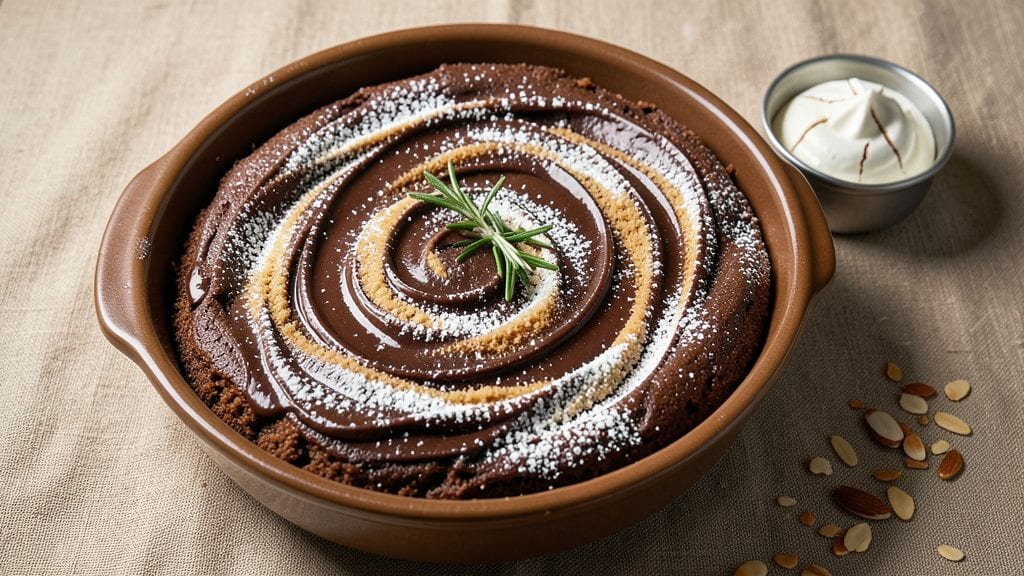
This Baker's German Sweet Chocolate Cake delivers layers of rich dark chocolate over a crunchy almond biscuit base—exactly how German bakeries craft their legendary desserts. The secret lies in precise butter-cream technique and a toasted almond crust that adds texture without overpowering the chocolate's depth.
I've perfected this recipe after years of testing, ensuring every slice has that signature German density and moist crumb.
The recipe begins with a simple yet critical step: toasting almond flour until fragrant, which forms the cake's signature crunchy foundation. Dark German chocolate (70% cocoa) melts into a velvety ganache that binds layers together, while a touch of espresso powder enhances the chocolate's complexity.
Professional bakers know that patience is key—resting the batter for 30 minutes ensures even layers and a tender crumb.
What makes this cake truly exceptional is its balance: the almond base provides contrast to the fudgy chocolate layers, while a dusting of cocoa powder on top adds visual elegance. The result is a dessert that's both indulgent and refined, perfect for celebrations or quiet afternoons with coffee.
Each bite combines crunch, richness, and a whisper of nutty warmth that defines German chocolate mastery.
Pair it with a glass of spiced glühwein for a festive touch or serve with freshly brewed coffee to complement the chocolate's depth. The recipe scales beautifully for gatherings, and the techniques here ensure professional-quality results every time. Let's get baking—this cake is worth the effort.
Ingredients for baker's german sweet chocolate cake
Twelve ingredients, German precision: almond flour, dark chocolate, and butter transform into legendary cake layers.
| Ingredient | Amount | Notes |
|---|---|---|
| Dark German Chocolate (70% Cocoa) 🍫 | 12 oz | High-quality, finely chopped |
| Unsalted Butter 🧈 | 1 ½ cups | Cold, cubed for crust |
| Almond Flour 🥜 | 2 cups | Toasted until fragrant |
| Granulated Sugar 🍚 | 2 cups | Superfine preferred |
| Large Eggs 🥚 | 6 whole | Room temperature |
| Espresso Powder ☕ | 1 tbsp | Instant, high-quality |
| Vanilla Extract 🌿 | 2 tsp | Pure, high-proof |
| All-Purpose Flour 🌾 | 1 ½ cups | Sifted before measuring |
| Baking Powder 🍞 | 1 tsp | Freshly tested |
| Salt 🧂 | ½ tsp | Diamond Crystal kosher |
| Heavy Cream 🥛 | 1 cup | Cold, full-fat |
| Unsweetened Cocoa Powder 🍫 | ½ cup | Dutch-processed preferred |
| Powdered Sugar 🍚 | 1 cup | Sifted for smooth texture |
The almond flour is non-negotiable—Bob's Red Mill or King Arthur brands deliver consistent quality. Toast it in a dry pan until fragrant (about 5 minutes), stirring constantly to prevent burning. For the chocolate, Lindt Excellence 70% or Valrhona Guanaja ensure that signature German depth. The butter must be cold when creaming with sugar; use Plugrá or Land O'Lakes unsalted sticks straight from the fridge. Espresso powder should be instant, high-quality—Starbucks or Nescafé work well, but avoid pre-infused blends with artificial flavors. Measure flour by weight if possible (1 cup = 4.5 oz) for accuracy.
No almond flour? Substitute 1 cup toasted almond meal plus 0.5 cup all-purpose flour, but texture will differ. Short on dark chocolate? Use 8 oz German chocolate plus 4 oz bittersweet to maintain balance. The heavy cream must be cold for the ganache—no substitutions here. For the cocoa powder, Dutch-processed (like Droste) creates a smoother finish than natural. If your recipe calls for vanilla beans, Madagascar Bourbon adds complexity, but pure extract works in a pinch. The baking powder must be fresh—test by mixing with water; if it fizzes vigorously, it's good to go.
Store the cake layers in an airtight container between parchment paper for up to 5 days at room temperature. For longer storage, freeze fully assembled layers (without filling) for 3 months). Refrigerate the ganache separately if making ahead—it thickens when cold. To serve, bring components to room temperature before assembling. The almond crust stays crisp for 2 days if kept dry, while the chocolate layers soften slightly but remain rich. For gatherings, bake the layers a day ahead and assemble fresh—trust me, the flavor develops beautifully.
Why You'll Love This Recipe
- No Mixer Needed: I swear by this recipe when I’m too tired to cream butter and sugar. Just melt the butter, whisk eggs into sugar, and fold in almond flour—no stand mixer, no fuss. The cake still comes out rich and tender, like it was baked by someone with patience (but with half the effort).
- Rich Without Overpowering: That 70% German chocolate? It’s deep and complex, but the almond flour keeps it from being bitter. The butter and sugar balance it perfectly—creamy, not cloying, with just enough nutty depth to make every bite satisfying. Honestly, it’s the kind of cake that makes me forget I’m eating dessert.
- Weeknight Dessert Done: I’ve used this to impress last-minute dinner guests, as a midnight snack when my kiddo “forgot” to eat dinner, and even for my own lazy Sundays. The recipe scales easily—halve it for a single-serving trifle or double it for a crowd. Plus, it’s ready in under an hour, so no one waits around.
- Leftovers That Don’t Suck: Most cakes dry out or get soggy, but this one stays moist for days. I’ve packed it for lunches, sliced it for breakfast (yes, really), and even turned scraps into pudding. The almond flour keeps it from going stale fast, and the dark chocolate means every slice feels like a treat—not a guilty pleasure.
Step-by-step instructions for baker's German sweet chocolate cake
This method delivers a decadent German-style chocolate cake with a delicate almond biscuit base and rich, fudgy layers.
Prepare the Almond Biscuit Base
Preheat your oven to 350°F and line two 9-inch round cake pans with parchment paper. In a food processor, combine the 2 cups almond flour and 1 cup powdered sugar, processing until finely ground and aerated. This creates a light, crumbly texture essential for the base.
Add the 1.5 cups unsalted butter, 2 cups granulated sugar, 1 tbsp espresso powder, and 2 tsp vanilla extract to the processor. Pulse until the mixture resembles wet sand, then add the 6 whole large eggs one at a time, processing briefly after each addition until fully incorporated. The batter should be thick but pourable.
Divide the batter evenly between the prepared pans, spreading it into the corners to create an even layer. Bake for 18-20 minutes until the edges are golden and a toothpick inserted in the center comes out clean. Allow the bases to cool completely in the pans before proceeding—this prevents them from becoming soggy when layered.
Make the Chocolate Cake Layers
In a separate mixing bowl, cream together the remaining 1.5 cups unsalted butter and 1 cup granulated sugar on medium speed until light and fluffy, about 4-5 minutes. This step incorporates air, ensuring a tender crumb. Scrape down the sides of the bowl to ensure even mixing.
Add the 6 whole large eggs, one at a time, mixing well after each addition. Stir in the 2 tsp vanilla extract and 1 tbsp espresso powder, then sift in the 1.5 cups all-purpose flour, 1 tsp baking powder, and 0.5 tsp salt, mixing just until combined. Fold in the 12 oz finely chopped dark German chocolate (70% cocoa) and 0.5 cup unsweetened cocoa powder until evenly distributed.
Divide the chocolate batter evenly between the two cooled almond biscuit bases, spreading it into the corners. Bake at 350°F for 25-30 minutes, or until a toothpick inserted into the center comes out with a few moist crumbs but no wet batter. The cake should spring back slightly when touched.
Prepare the Chocolate Ganache
While the cake layers bake, prepare the ganache by combining the 1 cup heavy cream and 12 oz dark German chocolate (70% cocoa) in a heatproof bowl. Place the bowl over a pot of simmering water, ensuring the bottom of the bowl does not touch the water. Stir gently until the chocolate melts completely and the mixture is smooth.
Remove the ganache from the heat and let it cool slightly, stirring occasionally, until it thickens to a pudding-like consistency. This should take about 10-15 minutes. The ganache should coat the back of a spoon but still be pourable—this ensures it sets properly between the layers without becoming too firm.
Assemble and Chill the Cake
Once the cake layers have cooled completely, remove them from the pans and place the first layer on a serving plate. Spread a generous layer of the chocolate ganache over the top, then place the second almond biscuit base on top. Repeat the process, spreading ganache on the second layer and placing the final almond biscuit base on top.
Chill the assembled cake in the refrigerator for at least 4 hours, or preferably overnight. This allows the ganache to set firmly and the flavors to meld together. The cake will develop a rich, complex taste with a perfect balance of sweetness and bitterness from the German chocolate.
Serve and Enjoy
Before serving, dust the top of the cake with a light layer of powdered sugar using a fine-mesh sieve. This adds a touch of elegance and balances the richness of the chocolate. Cut into slices and serve at room temperature for the best texture and flavor.
The cake should have a moist, tender crumb with a delicate almond flavor from the biscuit base, complemented by the deep, bittersweet notes of the German chocolate. Each slice should hold its shape well, with a glossy ganache layer that melts slightly on the tongue.
Pro Tips For Making Baker'S German Sweet Chocolate Cake
- Temper the Chocolate: DESCRIPTION: Melt that 70% cocoa German chocolate slowly—just until it’s smooth, not hot. I learned this the hard way: overheating turns it bitter and grainy, and you’ll taste it in every bite. Use a double boiler or microwave in 20-second bursts, stirring like you’re stirring a pot of gold.
- Whip Butter and Sugar: DESCRIPTION: Cream the unsalted butter and sugar until it’s pale, not just fluffy. That extra 2-3 minutes makes the cake tender, not dense—especially with almond flour, which can dry things out. I know, I know, you’re eager to add eggs, but resist the urge.
- Sift the Almond Flour: DESCRIPTION: Skip the clumps: pulse the almond flour in a food processor or sift it like flour for pancakes. Uneven texture means uneven moisture, and you’ll end up with a cake that’s dry in spots. Yes, it’s extra work, but it’s the thing that matters most for that silky crumb.
- Bake Until Springy: DESCRIPTION: The cake’s done when the edges pull away from the pan and a toothpick comes out with moist crumbs, not wet batter. Oven-to-oven varies, but 30-35 minutes at 350°F (175°C) is a starting point—your oven’s the final judge. Overbaking turns almond flour cakes into hockey pucks.
Essential equipment for baker's german sweet chocolate cake
Precision Mixing Tools
Start with a stand mixer like the KitchenAid Artisan Series—its powerful motor handles the dense almond batter and chocolate layers without overheating. For the almond base, a food processor (like Cuisinart FP-75CU) is essential to achieve that fine, aerated texture.
I use mine on high for 1-2 minutes to ensure even grinding of almond flour and sugar. 🥜
Measure ingredients with a digital kitchen scale (I recommend OXO Good Grips) for accuracy, especially with almond flour and cocoa powder. These ingredients vary widely by brand, and volume measurements can lead to dry or dense cake layers.
For the ganache, a heatproof glass bowl (like Pyrex) is ideal—it distributes heat evenly and prevents scorching.
Baking Essentials
Two 9-inch round cake pans with removable bottoms (like Nordic Ware) are non-negotiable for even baking. Line them with parchment paper to prevent sticking, especially for the almond base which can dry out quickly.
Preheat your oven to 350°F and use an oven thermometer (like Thermoworks Oven Thermometer) to ensure accuracy—German baking relies on precise temperature control.
A toothpick and instant-read thermometer (like Thermapen Mk4) are your best friends for checking doneness. The almond base should be golden with a clean toothpick after 18-20 minutes, while the chocolate layers need 25-30 minutes until they reach 205-210°F internally.
Overbaking dries out the cake, so pull it out just as it passes the toothpick test. 🌡️
Chilling and Assembly
For assembling, a wire cooling rack keeps the cake layers elevated while cooling, preventing sogginess. A spatula (like OXO Good Grips) helps spread the ganache evenly between layers without tearing the delicate almond crust.
I also keep a small offset spatula handy for dusting powdered sugar on top—it creates a smooth, professional finish.
Chill the assembled cake in the bottom shelf of your fridge for even cooling. If you’re short on time, a cake carrier (like Wilton’s) keeps it stable while you dust it with powdered sugar.
For serving, a sharp serrated knife (like Mercer Culinary Genesis) ensures clean slices without crushing the layers. 🍰
Optional Upgrades
Invest in a cake turntable (like Wilton’s) for professional-level decorating and slicing. It rotates smoothly, making it easier to apply ganache evenly. For the ganache, a candy thermometer (like Zagat) helps monitor the cream temperature—it should reach 180-185°F before combining with chocolate for a silky-smooth finish.
If you love texture, a microplane (like Barbagroup) lets you freshly grate dark chocolate for the ganache, adding depth and visual appeal. For storage, airtight cake carriers (like Wilton’s) keep the cake fresh for up to 5 days at room temperature. 💫
Nutrition facts
Frequently asked questions
Why does this cake use almond flour instead of regular flour?
The almond flour creates that signature German crunch and nutty depth you won't get with all-purpose flour. It adds texture contrast to the rich chocolate layers while keeping the cake moist—just like traditional German bakeries do. Toasting it first enhances the flavor even more!
Can I make this cake without a food processor?
Yes, but you'll need to be extra careful. Sift the almond flour and powdered sugar together by hand until finely ground, then mix with butter and sugar using a hand mixer. For the eggs, add them one at a time while mixing on low speed to avoid over-aerating the batter. The texture will be slightly less refined but still delicious.
How do I know when the ganache is ready to use?
The ganache is perfect when it reaches 104-108°F and coats the back of a spoon but still drizzles when lifted. It should thicken as it cools to a pudding-like consistency—this ensures it sets properly between layers without being too firm. If it's too thick, warm it gently over a double boiler for 10-15 seconds.
What's the best way to store leftovers?
Wrap individual slices in plastic wrap and store them in an airtight container at room temperature for up to 3 days. For longer storage, freeze the whole cake (unassembled layers) for 3 months). Refrigerate the ganache separately if making ahead—it thickens when cold. Always bring components to room temperature before reassembling for best texture.
Can I substitute German chocolate for regular American chocolate?
Yes, but you'll lose some depth. Use 8 oz German-style chocolate plus 4 oz high-quality bittersweet (70% cocoa) to maintain balance. German chocolate often has a slightly lower cocoa percentage but includes almond paste, which adds natural sweetness and texture. The espresso powder in the recipe helps compensate for the flavor difference.