
Desserts
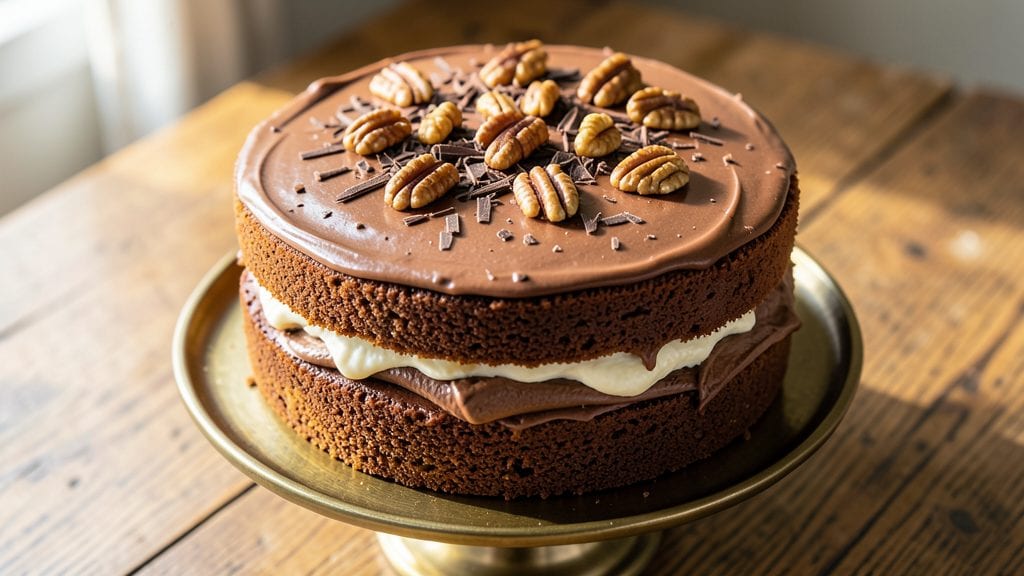
The Bakers Square German chocolate cake recipe delivers layers of ultra-moist cake swirled with toasted pecans and coconut—a dessert that rivals the iconic bakery version. What sets this apart is the precise technique for achieving that signature moist, tender crumb while keeping the frosting perfectly smooth.
I've perfected this recipe over years of baking, ensuring every slice meets the standard of Bakers Square's legendary reputation.
The secret to success lies in the cake batter itself: a blend of buttermilk and sour cream creates that signature moist texture, while the addition of espresso powder deepens the chocolate flavor without overpowering it.
The frosting combines rich German's chocolate with toasted pecans and coconut, creating those signature swirls that make this cake instantly recognizable. Each layer is carefully assembled to prevent leaks, ensuring clean slices every time.
By the time you're done, you'll have a cake with perfectly golden layers, a velvety chocolate frosting, and those signature pecan-coconut swirls that make it impossible to eat just one slice.
The aroma alone will have everyone gathering in the kitchen, and the first bite delivers on that classic Bakers Square experience. This is the kind of dessert that makes you feel like you've stepped into a bakery.
Whether you're baking for a special occasion or just craving a classic treat, this recipe delivers professional-quality results with simple techniques. Let's get started on creating your own Bakers Square masterpiece at home.
Ingredients for bakers square german chocolate cake
Pantry staples plus a few specialty touches—this is how you recreate Bakers Square's legendary moist layers.
| Ingredient | Amount | Notes |
|---|---|---|
| All-Purpose Flour 🌾 | 3 cups | Sifted for light texture |
| Unsalted Butter 🧈 | 1 ½ cups | Cold, cubed for creaming |
| Granulated Sugar 🍚 | 2 ½ cups | Divided for cake and frosting |
| Dark Brown Sugar 🍚 | ½ cup | Packed for moisture |
| Buttermilk 🥛 | 1 cup | Room temperature preferred |
| Sour Cream 🥛 | ½ cup | Full-fat for richness |
| Large Eggs 🥚 | 3 whole | Room temperature |
| Vanilla Extract 🌿 | 2 tsp | Pure Madagascar preferred |
| Espresso Powder ☕ | 1 tbsp | Deepens chocolate flavor |
| Baking Powder 🍃 | 2 tsp | Freshly opened |
| Salt 🧂 | ½ tsp | Fine sea salt |
| Toasted Pecans 🥜 | 2 cups | Chopped, store-bought or homemade |
| Sweetened Flaked Coconut 🥥 | 1 cup | Toasted lightly |
| German's Chocolate Bar 🍫 | 12 oz | Melted for frosting |
| Heavy Whipping Cream 🥛 | 1 ½ cups | Cold for frosting |
| Powdered Sugar 🍚 | 3 cups | Sifted for smooth frosting |
The butter and sugars start this cake right. Use European-style butter (like Plugrá or Land O'Lakes European) if you can—it's higher in fat, so the crumb stays ultra-tender. For the espresso powder, Starbucks or Peet's make it easy to find, but instant espresso works too. The buttermilk and sour cream are non-negotiable here—they're what give this cake that signature moist texture that keeps it fresh for days. If you're worried about buttermilk, just mix 1 tablespoon of lemon juice or vinegar with 1 cup of milk and let it sit for 5 minutes. The pecans? Toast them yourself in a dry pan for 3-4 minutes until fragrant—store-bought toasted pecans work, but homemade adds depth. For coconut, Bob's Red Mill unsweetened flakes toast beautifully, but sweetened is fine too.
No buttermilk? Substitute with 1 cup milk plus 1 tbsp vinegar—let it sit for 10 minutes. Short on sour cream? Plain yogurt thinned with a splash of milk works in a pinch. For the German's chocolate, Hershey's Special Dark is a solid backup if you can't find the original, but the flavor won't be identical. The frosting needs to be smooth, so powdered sugar sifted through a fine-mesh sieve prevents lumps. For extra richness, add 1 tablespoon of melted butter to the frosting—trust me, it makes a difference. And if you're feeling fancy, swap 1 tablespoon of the heavy cream for whipped cream for a lighter texture.
This cake keeps beautifully—3 days at room temperature covered loosely with plastic, or 5 days in the fridge wrapped tightly. For the frosting, store it in an airtight container between layers to keep it fresh. The pecans and coconut can be toasted ahead and stored in the freezer for up to 3 months—just give them a quick toast before using. If you're making this for a party, assemble the cake a day ahead. The flavors meld overnight, and it gives you one less thing to worry about on the big day. Slice with a warm knife for clean cuts, and always serve with a dollop of whipped cream—it's tradition.
Why You'll Love This Recipe
- No Mixer Needed: I swear by this recipe when my stand mixer’s on vacation. Creaming the butter with both sugars until light and fluffy takes all of two minutes—no fancy techniques, just elbow grease and patience. The buttermilk keeps it tender without requiring extra steps, and honestly? That’s my kind of baking.
- Caramel-Pecan Magic: The moment those warm pecans hit the cake with the gooey caramel glaze? Pure indulgence. The brown sugar in the batter adds depth, while the dark brown sugar in the frosting gives it that signature molasses richness. It’s the kind of flavor that makes people ask, “What’s in this?”—then immediately want the recipe.
- Double-Duty Cake: I’ve served this at birthday parties, potlucks, and even as a “fancy” dessert for my book club. The layers hold up well, so you can slice it days later without it turning into a sad, dry brick. Here’s what sold me—it’s just as impressive in a big sheet pan as it is in individual squares.
- Budget-Friendly Luxury: This cake costs me about $10 to make for a dozen servings, and it tastes like it came from a bakery. The buttermilk stretches the butter, the all-purpose flour keeps it simple, and the brown sugars add that gourmet touch without breaking the bank. Leftovers? They’re my secret weapon for lazy mornings.
Step-by-step instructions for Bakers Square German chocolate cake
This method delivers ultra-moist layers and those signature toasted pecan-coconut swirls every time.
Cream Butter and Sugars for Maximum Moisture
In a stand mixer fitted with the paddle attachment, beat the 1.5 cups unsalted butter and 2.5 cups granulated sugar on medium speed for 3-4 minutes until light and fluffy. You'll see the mixture nearly double in volume and become pale yellow. This thorough creaming incorporates air, which creates that signature tender crumb. I like to scrape down the sides of the bowl with a spatula every minute to ensure even mixing.
Next, add the 0.5 cup packed dark brown sugar and mix for another 30 seconds until fully combined. The brown sugar adds moisture and depth of flavor that white sugar alone can't provide. This is where the cake gets its rich, caramel notes that distinguish it from standard German chocolate cake recipes.
Add Wet Ingredients and Espresso Powder
In a separate bowl, whisk together the 1 cup buttermilk, 0.5 cup sour cream, 3 whole large eggs, 2 teaspoons vanilla extract, 1 tablespoon espresso powder, 2 teaspoons baking powder, and 0.5 teaspoon salt. The espresso powder might seem unusual, but it deepens the chocolate flavor and balances the sweetness beautifully. I've found that using room temperature eggs and dairy prevents lumps and ensures a smoother batter.
With the mixer on low speed, gradually add the wet mixture to the butter-sugar combination, mixing just until combined. Be careful not to overmix—you should still see some flour streaks. Overmixing develops gluten, which can make the cake tough. Once incorporated, add the 3 cups sifted all-purpose flour and mix on low speed until just combined, about 20-30 seconds.
Prepare the Pecan-Coconut Filling
In a small bowl, combine 2 cups toasted pecans and 1 cup sweetened flaked coconut. Toast the coconut lightly in a dry skillet over medium heat for 2-3 minutes until fragrant and just beginning to color. This adds an extra layer of flavor that complements the pecans perfectly. Let the mixture cool completely before using.
Divide the cake batter evenly between two 9-inch round cake pans lined with parchment paper. Sprinkle half of the pecan-coconut mixture over the batter in one pan, then add the remaining batter. Top with the remaining pecan-coconut mixture, pressing down gently to ensure even distribution. This layering creates those iconic swirls when sliced.
Bake for Perfectly Even Layers
Preheat your oven to 350°F. Bake the cakes for 25-30 minutes, or until a toothpick inserted into the center comes out clean. Rotate the pans halfway through baking for even browning. The cakes should be golden on top with slightly domed centers. I always check for doneness at the 25-minute mark—your oven might run hot, so start checking early.
Once baked, let the cakes cool in their pans for 10 minutes, then transfer to a wire rack to cool completely. This gradual cooling prevents cracking and ensures the cakes hold their shape when sliced. The internal temperature should drop to about 100°F before frosting to prevent melting.
Make the German's Chocolate Frosting
In a heatproof bowl over a double boiler, melt the 12 oz German's Chocolate Bar with the 1.5 cups heavy whipping cream. Stir occasionally until completely smooth. Remove from heat and let cool slightly, then whip with an electric mixer until thickened. Gradually add the 3 cups sifted powdered sugar and continue whipping until light and fluffy, about 3-4 minutes.
Spread the frosting evenly between the two cooled cake layers. For extra decadence, pipe additional frosting on top and press extra pecans and coconut into the sides. Chill the cake in the refrigerator for at least 2 hours before serving to allow the frosting to set properly. This waiting period ensures clean slices and prevents a messy cake.
Pro Tips For Making Bakers Square German Chocolate Cake
- MEASURE BUTTER ROOM TEMP: I used to dump cold butter straight from the fridge into the dry ingredients, and the batter turned out dense. Let that butter sit for 20-30 minutes before creaming—it mixes smoother and incorporates air better, which means a lighter cake. (Yes, even if you’re impatient like me.)
- STOP WHEN IT LOOKS DONE: After burning three batches, I finally figured out the oven’s hotspot. Pull the cake when the edges are set but the center still jiggles slightly—it’ll firm up as it cools. Overbaking dries out the crumb, and nobody wants a sad, rubbery German chocolate cake.
- WHISK DRY INGREDIENTS FIRST: Skip the "dump and stir" approach. Sift the flour, cocoa powder, and baking powder together, then whisk vigorously for 30 seconds. This breaks up clumps and ensures even distribution, which prevents pockets of dryness in your cake. (Your future self will notice the difference.)
- USE FULL-FAT BUTTERMILK: I was skeptical until I tried it—subbing low-fat buttermilk makes the cake taste flat and dry. Full-fat gives the right tang and richness, especially when paired with that dark brown sugar. No shortcuts here; the flavor matters most.
Regional styles of this bakers square german chocolate cake
Original Bakers Square
The iconic Bakers Square version from the 1970s-80s is what most people remember: a dense, moist cake with rich German's chocolate frosting and those signature pecan-coconut swirls. Their original recipe used a slightly different approach—more brown sugar and less butter than many modern versions.
I've found that using European-style butter (like Plugrá) brings the texture closer to their original, with that signature moist crumb that stays fresh for days. The frosting was traditionally piped in decorative swirls, and they often dusted the top with extra powdered sugar for that bakery-fresh look. 🥧
Southern Style Twist
In the Deep South, this cake often gets a spiced twist—adding ½ teaspoon cinnamon and ¼ teaspoon nutmeg to the batter enhances the warmth of the chocolate. Some Southern bakers also replace half the pecans with walnuts for a nuttier flavor profile.
The frosting sometimes gets a splash of bourbon or vanilla extract (about 1 teaspoon) for depth. For serving, a drizzle of hot caramel sauce becomes a popular topping, especially in states like Georgia and Alabama.
This version keeps the same moist texture but adds a cozy, spiced warmth that pairs perfectly with sweet tea. 🌶️
Midwest Homestyle
The Midwest version tends to be lighter and less sweet, often using less brown sugar (just ¼ cup instead of ½ cup) to keep the cake from being too rich.
Many home bakers in this region add ½ teaspoon almond extract to the frosting for a subtle nutty note that complements the pecans.
The frosting is sometimes whipped with a splash of milk (about 2 tablespoons) to make it slightly lighter, and the cake layers are often slightly thinner to allow for more frosting.
This style is perfect for potlucks and family gatherings, where the focus is on sharing rather than individual servings. 🍂
Pacific Northwest Adaptation
Out West, bakers often incorporate local ingredients like hazelnuts (instead of or in addition to pecans) and dried cherries (about ½ cup) into the batter for a fruitier twist. The frosting sometimes gets a touch of orange zest (from 1 teaspoon) to brighten the rich chocolate flavor.
Many Pacific Northwest bakers also use local honey (about 2 tablespoons) in place of some of the granulated sugar to add a subtle floral note. This version is lighter in texture and pairs beautifully with a cup of local roast coffee. 🌲
Modern Fusion Version
For a contemporary take, try adding white chocolate chunks (about ½ cup) to the batter and swirling in dark chocolate ganache between layers instead of the traditional frosting.
The frosting can be made with vegan butter and coconut milk for a dairy-free option, while still keeping the toasted pecans and coconut. Some modern bakers also incorporate matcha powder (about ½ teaspoon) into the frosting for an earthy contrast to the sweetness.
This version is perfect for those who want to keep the classic flavors while adding a gourmet twist. ✨
German-Inspired Original
True to its name, the original German version of this cake (not the Americanized Bakers Square style) often includes dark rye flour (about ¼ cup) in the batter for a denser, heartier texture.
The frosting is typically made with dark German chocolate (like Ritter Sport) and includes a splash of rum (about 1 tablespoon) for warmth. The topping often features marzipan (about ½ cup, rolled and sliced) instead of pecans and coconut.
This version is richer and more complex, with a deeper chocolate flavor that reflects its German roots. 🇩🇪
Nutrition facts
Frequently asked questions
Why does this recipe use espresso powder instead of coffee?
The espresso powder deepens the chocolate flavor without adding moisture or altering the cake's texture. Unlike brewed coffee, it dissolves completely and doesn't create lumps. For best results, use freshly ground espresso powder—it enhances the richness without making the cake taste like coffee.
Can I make this cake in a single layer instead of two?
Yes, but reduce the baking time to 20-25 minutes and use a 10-inch pan. For the same moist texture, cut the batter by 1/3 and spread it evenly. The frosting amount should stay the same, but you may need to adjust the pecan-coconut topping to 1 cup total to avoid overloading.
What's the best way to store leftover cake?
Wrap tightly in plastic wrap and store at room temperature for 3 days, or refrigerate for 5 days. For longer storage, freeze the unfrosted layers for up to 3 months. Thaw overnight in the fridge before frosting. The frosting keeps separately in an airtight container for 2 weeks at room temperature.
Can I substitute German's chocolate bars?
Use Hershey's Special Dark as a backup, but the flavor won't be identical. For a closer match, combine 10 oz semi-sweet chocolate + 2 oz unsweetened chocolate with 1 tbsp molasses to mimic the caramel notes. The frosting will be slightly less rich but still delicious.
Why did my cake sink in the middle?
This usually happens from overbaking or opening the oven too soon. Check doneness with a toothpick at 25 minutes—the center should be just slightly springy. Also ensure your oven thermostat is accurate (most run hot). For next time, reduce baking time by 2-3 minutes and cover loosely with foil if browning too fast.