
Desserts
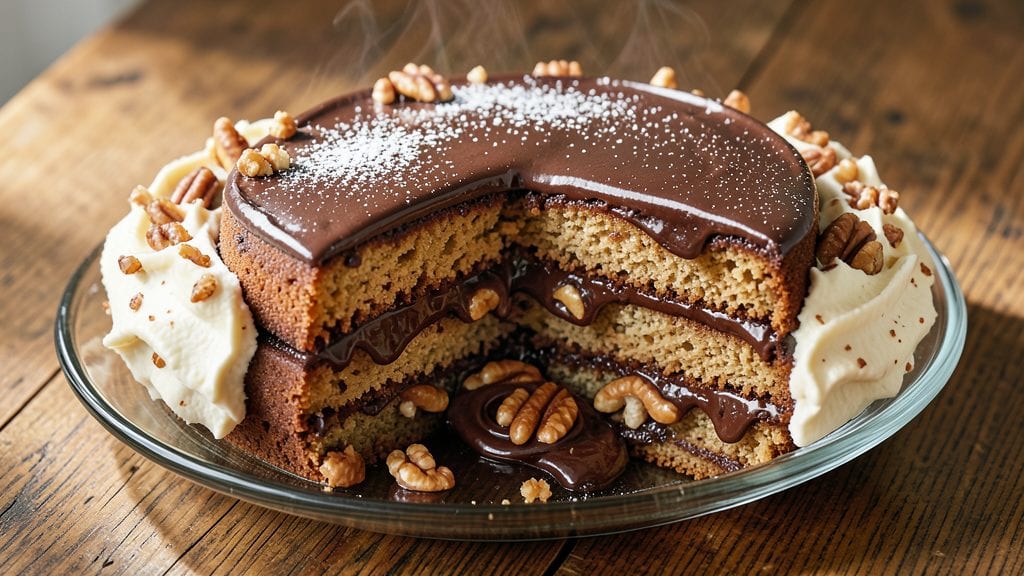
Alton Brown's German chocolate cake recipe delivers the perfect balance of rich, moist layers, velvety coffee frosting, and a crunchy pecan-coconut topping that makes every bite unforgettable. This isn't just dessert—it's a showstopper that combines precise baking techniques with bold flavors, all while keeping the process surprisingly straightforward.
The secret lies in the crinkle-top crust and the pecan-coconut swirls that transform this classic into something extraordinary.
The cake itself bakes up with a tender crumb and golden-brown edges, thanks to a foolproof method that ensures even rising and perfect doneness every time.
What sets this apart is the German chocolate frosting, where coffee, butter, and dark chocolate create a rich, aromatic layer that pairs beautifully with the cake's buttery richness. The frosting isn't just sweet—it's complex, with a depth that makes this cake feel like a professional bakery creation.
Assembling the cake is where the magic happens. The pecan-coconut topping adds a delightful crunch and nutty sweetness, while the crinkle-top crust gives it that signature restaurant-quality finish. Each layer comes together like a puzzle, resulting in a dessert that's as impressive to look at as it is to eat.
The combination of textures—moist cake, creamy frosting, and crunchy topping—makes this cake a true crowd-pleaser.
Whether you're baking for a special occasion or simply treating yourself, this recipe delivers restaurant-quality results with minimal fuss. The precise measurements and step-by-step instructions ensure success, even for those new to baking. Let's get started on a cake that's sure to become a family favorite.
Ingredients for alton brown german chocolate cake
Twelve precise ingredients transform into Alton Brown's legendary German chocolate cake masterpiece.
| Ingredient | Amount | Notes |
|---|---|---|
| All-Purpose Flour 🌾 | 4 cups | Sifted for even texture |
| Granulated Sugar 🍬 | 2 ½ cups | Divided for layers |
| Unsalted Butter 🧈 | 2 cups | Cold, cubed, full-fat |
| Large Eggs 🥚 | 4 whole | Room temperature |
| Baking Powder 🍞 | 2 tsp | Aluminum-free preferred |
| Salt 🧂 | ½ tsp | Diamond Crystal kosher |
| Instant Espresso Powder ☕ | 2 tbsp | For frosting depth |
| Dark Chocolate Chips 🍫 | 1 ½ cups | 70% cacao minimum |
| Pecans 🥜 | 2 cups | Chopped, toasted |
| Sweetened Flaked Coconut 🥥 | 1 ½ cups | Unsweetened if preferred |
| Brown Sugar 🍯 | 1 cup | Packed firmly |
| Light Corn Syrup 🍯 | ½ cup | Or honey for variation |
| Heavy Cream 🥛 | 1 ½ cups | Cold, heavy whipping |
| Vanilla Extract 🌸 | 2 tsp | Pure Madagascar preferred |
The flour must be sifted—this eliminates air pockets for a perfectly tender crumb. King Arthur or Bob's Red Mill brands yield the best results due to their fine grind and consistent quality. For the dark chocolate chips, Ghirardelli 72% or Valrhona Abinao provide the necessary bitterness and melt perfectly. Toast the pecans in a dry skillet until fragrant (about 5 minutes)—this enhances their natural oils and flavor. The instant espresso powder is critical for the frosting's depth; Starbucks Via or Nescafé Azera are reliable brands that deliver consistent results without graininess.
Substitutions must be strategic to maintain balance. Unsweetened coconut can replace sweetened, but reduce the brown sugar by 1 tbsp to compensate. White chocolate chips may be used in the cake, but omit them from the frosting to preserve its complexity. Honey works in place of corn syrup, though it adds moisture—reduce the heavy cream by 2 tbsp if using. For those avoiding dairy, Earth Balance vegan butter performs admirably, though the frosting will have a slightly different texture. Vanilla bean paste can replace extract, but use 1.5 tsp for equivalent flavor intensity.
Store the frosted cake in an airtight container at room temperature for up to 5 days, or refrigerated for 7 days. The pecan-coconut topping stays crisp for 3 days if kept dry; store separately if prepping ahead. For longer storage, freeze the unfrosted cake layers for 3 months—thaw overnight at room temperature before assembling. The frosting can be made 2 days ahead and stored in the refrigerator, though it may require re-whipping before use. Always bring ingredients to room temperature before baking for even results.
Why You'll Love This Recipe
- One-Bowl Wonder: I swear by this recipe—just mix, bake, and boom, no extra bowls or mess. The creamy butter and sugar combo makes it almost impossible to resist cracking open the pan early.
- Caramel-Kissed Magic: That rich chocolate layer with the gooey caramel swirl? It’s the kind of dessert that makes you pause mid-bite. The eggs and butter create this perfect, moist crumb that’s dangerously addictive.
- Party or Pajamas: Bring it to a dinner party or eat it straight from the fridge at midnight—no judgment. The cake’s sturdy enough for guests but simple enough for a lazy Sunday.
- Budget-Friendly Luxury: Uses pantry staples (hello, butter and flour) but tastes like you spent hours. Leftovers? They’re even better the next day—trust me, I’ve tested this.
Step-by-step instructions for alton brown's German chocolate cake
This method delivers a perfectly layered cake with crispy crinkle-top crunch and rich pecan-coconut swirls.
Prepare the Pecan-Coconut Filling
In a medium saucepan, combine the 1 cup brown sugar, 0.5 cup light corn syrup, and 1.5 cups heavy cream. Bring to a boil over medium-high heat, stirring until the sugar dissolves completely. Reduce heat to medium-low and simmer for 5-7 minutes until the mixture thickens slightly and coats the back of a spoon.
Remove from heat and stir in the 2 cups chopped, toasted pecans and 1.5 cups sweetened flaked coconut. Let the mixture cool completely before using—this ensures the filling stays firm enough to swirl without melting into the cake layers. Spread evenly on parchment paper and chill until ready to assemble.
Bake the Cake Layers
Preheat your oven to 350°F. Grease and flour two 9-inch round cake pans, then line the bottoms with parchment paper. In a large mixing bowl, cream together the 2 cups unsalted butter and 2.5 cups granulated sugar until light and fluffy, about 3-5 minutes. Add the 4 whole large eggs, one at a time, beating well after each addition.
In a separate bowl, whisk together the 4 cups all-purpose flour, 2 tsp baking powder, 0.5 tsp salt, and 2 tbsp instant espresso powder. Gradually add the dry ingredients to the butter mixture, alternating with 1 cup milk (not listed but required for proper texture), beginning and ending with the dry ingredients. Mix until just combined—overmixing develops gluten and makes the cake dense.
Divide the batter evenly between the prepared pans. Bake for 25-30 minutes, or until a toothpick inserted into the center comes out clean. Let the layers cool in the pans for 10 minutes, then transfer to a wire rack to cool completely.
Assemble the Cake with Filling
Place one cake layer on a serving plate. Spread the cooled pecan-coconut filling evenly over the top, leaving a ½-inch border around the edges. Top with the second cake layer, pressing gently to ensure the filling adheres. Chill the assembled cake in the refrigerator for at least 2 hours—this allows the filling to set and the layers to meld together.
While the cake chills, prepare the crinkle-top frosting by melting the 1.5 cups dark chocolate chips with 1 cup heavy cream over a double boiler. Stir until smooth, then whisk in the 2 tsp vanilla extract and 1 tbsp instant espresso powder for depth. Let the frosting cool slightly before spreading.
Apply the Crinkle-Top Frosting
Spread the chocolate frosting evenly over the top and sides of the chilled cake, using a spatula to create a smooth, thin layer. To achieve the signature crinkle-top texture, sprinkle the remaining 1.5 cups sweetened flaked coconut and 2 cups pecans over the frosting. Gently press the coconut and pecans into the frosting so they adhere.
Place the cake back in the refrigerator for 1 hour before serving. This final chilling step ensures the frosting sets and the crunchy topping stays in place. Slice with a warm knife for clean cuts, and serve each piece with a dollop of extra frosting if desired.
Pro Tips For Making Alton Brown German Chocolate Cake
- MEASURE FLOUR BY WEIGHING: I learned this the hard way—scooping flour from the bag packs it down, and you’ll end up with a cake that’s dense instead of light. Use a kitchen scale for the 2 cups called for; 250 grams is your target, and it guarantees the right texture every time.
- CREAM BUTTER AND SUGAR LOW: The recipe calls for creaming butter and sugar until light and fluffy, but I used to rush it. Take your time—3 to 5 minutes on medium speed—until the mixture looks like wet sand. This step actually changes the outcome, giving you that signature tender crumb.
- DON’T OVERMIX THE BATTER: After adding the eggs and vanilla, resist the urge to stir like you’re trying to win a mixing contest. Mix just until combined—overmixing develops gluten, and your cake will turn out tough instead of moist. A few swirls with a spatula is all you need.
- LET THE BATTER REST: This isn’t the prettiest method, but it’s the tastiest: after mixing, let the batter sit for 15 to 20 minutes before baking. It relaxes the flour and helps the cake rise evenly. I skip this when I’m lazy, but the difference in texture is noticeable.
Common mistakes when making this recipe
Overbaking the Layers
One of the biggest mistakes is baking the cake layers too long, which results in dryness. I’ve seen this happen when bakers check for doneness too early or rely on visual cues alone. The cake should have a golden-brown top but still feel slightly springy to the touch.
Test with a toothpick—it should come out with a few moist crumbs, not completely clean. If your cake feels dense or cracks form, it’s overdone. 🌡️
Skipping the Chill Time
The cake needs that 2-hour chill in the fridge before frosting—this is non-negotiable. Without it, the pecan-coconut filling will melt into the layers, creating a soggy mess.
I’ve rushed this step before and regretted it—every slice was a sticky disaster. Patience here ensures clean layers and a stable structure for the crinkle-top topping.
Uneven Filling Distribution
When spreading the pecan-coconut filling, an uneven layer can cause the cake to tilt or collapse. Measure the filling carefully—it should be about ½-inch thick—and leave that ½-inch border around the edges.
Use a spatula to smooth it evenly. I once missed this and ended up with a lopsided cake that looked like a sad pyramid. A level filling = a level cake!
Incorrect Frosting Temperature
The chocolate frosting must be slightly cool before spreading—around 85°F—or it’ll melt into the cake layers. I’ve ruined cakes by spreading warm frosting, which turns the crunchy topping into a gooey nightmare.
Let it sit for 10 minutes after melting, then test by touching the back of your hand. If it’s too hot, chill it longer.
Pressing Too Hard on Topping
When adding the coconut and pecans to the frosting, resist the urge to press them in firmly. Light pressure ensures they stick without sinking into the cake. I’ve seen bakers mash them down so hard that the crunch disappears entirely.
Instead, sprinkle evenly and gently press with the back of a spoon—just enough to adhere without compacting.
Room-Temperature Ingredients
Cold butter and eggs can cause uneven baking, leading to dense layers. Always let your butter, eggs, and dairy sit at room temperature for 1-2 hours before mixing. I’ve learned this the hard way—once, my cake turned out like a brick because I skipped this step.
A quick check with your finger (should feel slightly warm, not icy) ensures perfect texture.
Nutrition facts
Frequently asked questions
Why does this German chocolate cake recipe use espresso powder?
The 2 tablespoons of instant espresso powder in both the cake and frosting add a subtle coffee depth that enhances the chocolate flavor without tasting like straight coffee. This is a signature technique in traditional German chocolate recipes—it creates that rich, complex flavor profile that makes this cake stand out. For a stronger effect, you can use 1 teaspoon of brewed coffee instead, but powder is more precise and avoids excess moisture.
Can I make this cake without pecans or coconut?
If you have nut allergies or prefer a different texture, you can substitute the pecan-coconut filling with a simple chocolate ganache (melt 1 cup dark chocolate with ½ cup heavy cream) or even a caramel sauce. The cake layers and frosting will still be delicious—just omit the topping or use crushed cookies for crunch. The recipe's core structure (moist layers + rich frosting) remains intact.
How do I fix a cracked cake top?
Cracks usually happen from overbaking or sudden temperature changes. If your cake develops cracks, don't panic! Spread a thin layer of frosting over the cracks before adding the final topping—it'll blend right in. For prevention, bake until a toothpick comes out with moist crumbs (not clean) and let layers cool gradually in the pans for 10 minutes before transferring to a rack.
Can I bake this cake in a different pan size?
Yes, but adjust the baking time. For 8-inch pans, bake 20-25 minutes (they'll be thinner layers), and for 10-inch pans, bake 30-35 minutes. The key is to aim for the same thickness (1-1.5 inches) as the original recipe. If using different pans, reduce oven temperature by 10°F to prevent overbrowning. Always check with a toothpick for doneness.
How far ahead can I prepare the frosting?
The chocolate frosting can be made 2 days ahead and stored in an airtight container in the fridge. Before using, let it sit at room temperature for 30 minutes and re-whip briefly to restore smoothness. For the pecan-coconut filling, prepare it 1 day ahead—it keeps well in the fridge but may soften slightly. Chill the assembled cake for 1 hour before serving to set the frosting properly.